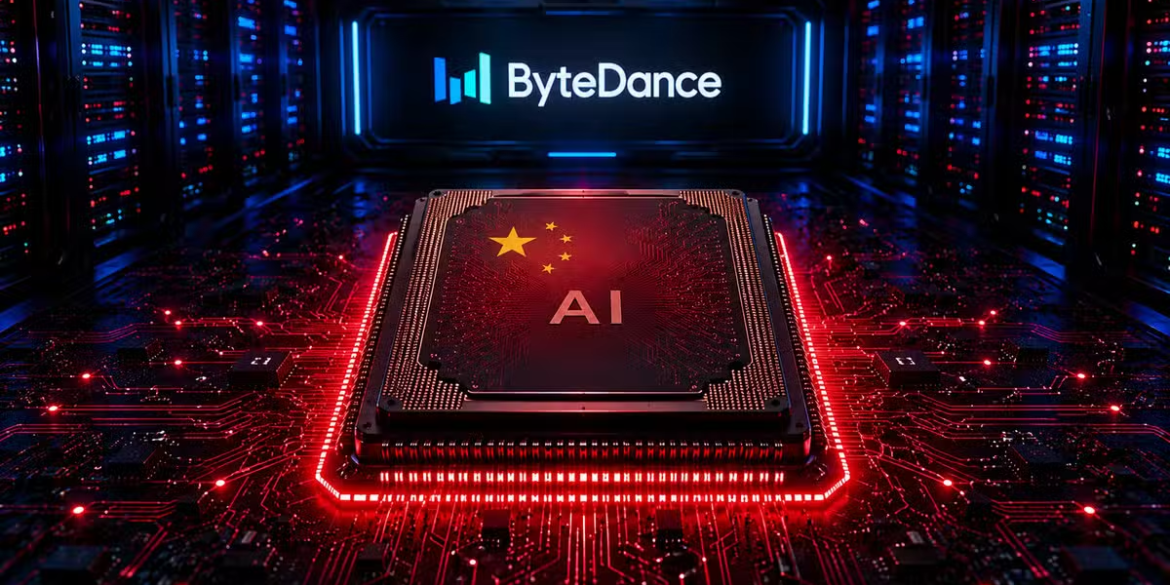
ByteDance, the parent company of TikTok, is reportedly in discussions with Shanghai-based Iluvatar CoreX to procure artificial intelligence chips for inference workloads, according to individuals familiar with the matter.
The potential agreement highlights China’s accelerating efforts to strengthen its domestic semiconductor ecosystem as global competition in AI hardware intensifies. If finalized, Iluvatar CoreX would become ByteDance’s third major local supplier of graphics processing units, joining Huawei and Cambricon in supporting the company’s expanding AI infrastructure needs.
In addition to talks with CoreX, ByteDance is also considering a separate arrangement with Baidu to utilize its Kunlunxin AI chips. These chips are designed to handle machine learning and inference tasks, which are essential for powering large-scale AI applications such as recommendation systems, search, and generative AI tools.
Industry sources indicate that Baidu’s Kunlunxin chips are already being used by other major Chinese technology firms, including Tencent, underscoring growing domestic adoption of locally developed AI hardware. However, ByteDance, Baidu, Iluvatar CoreX, and Tencent have not publicly commented on the reported discussions.
The move comes as global demand for AI computing power continues to rise, driven by rapid advancements in generative AI models and large-scale data processing. Companies operating at ByteDance’s scale require massive GPU resources to support services such as content recommendation algorithms, video processing, and AI-driven personalization.
China’s push to reduce reliance on foreign semiconductor suppliers has accelerated in recent years due to geopolitical restrictions and export controls affecting advanced chips. As a result, domestic firms are increasingly investing in homegrown alternatives to ensure stable access to critical computing infrastructure.
Iluvatar CoreX and Baidu’s Kunlunxin division are among several Chinese technology players working to develop competitive AI accelerators capable of handling complex machine learning workloads. While these chips are still evolving compared to leading global alternatives, they are gaining traction within China’s tech ecosystem.
Analysts note that partnerships like these could reshape the domestic AI hardware landscape by strengthening supply chain resilience and fostering competition among local chipmakers. For ByteDance, diversifying its chip suppliers may help ensure consistent access to computing resources as AI demand continues to grow.
As the AI industry expands, control over semiconductor supply is becoming a strategic priority for major technology companies worldwide. The outcome of ByteDance’s discussions with CoreX and Baidu will be closely watched as an indicator of China’s broader shift toward self-reliance in advanced computing technologies.