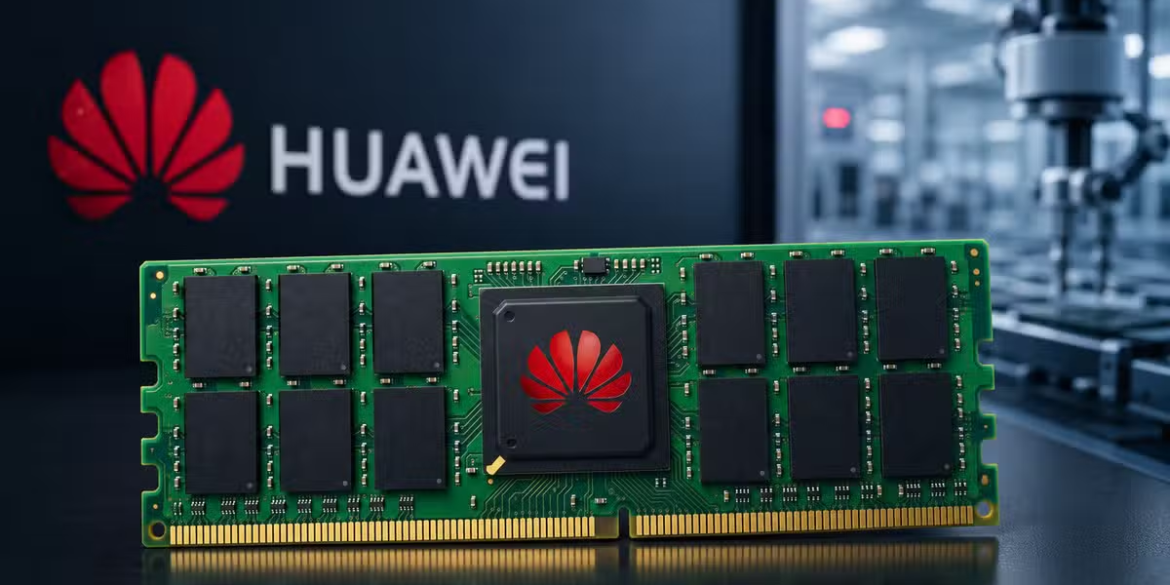
Huawei is reportedly backing a major memory chip manufacturing initiative in China as the company looks to reduce reliance on overseas suppliers amid growing global memory shortages and continued technology restrictions.
The reported project involves SwaySure Technology, a Shenzhen-based state-backed memory company that is believed to have close ties with Huawei. The planned facility is expected to strengthen China’s domestic semiconductor capabilities and support local production of memory components.
According to industry reports, the proposed manufacturing plant will use 12-inch wafer technology and initially operate with a 28nm production process. The facility is expected to target a monthly output capacity of around 140,000 wafers once production reaches planned levels.
The move comes as semiconductor companies worldwide face increasing pressure due to rising demand for memory products used in smartphones, artificial intelligence systems, computers, and other advanced technologies. A global shortage of memory components has further highlighted the importance of securing stable supply chains.
Huawei has faced significant challenges in accessing certain foreign technologies due to US trade restrictions. Building stronger domestic semiconductor capabilities could help the company reduce external dependence and improve control over critical components required for its products.
The development also aligns with China’s broader efforts to expand its domestic chip industry and compete in the global semiconductor market. The country has been investing heavily in local manufacturing facilities to strengthen its position in advanced technologies and reduce dependence on imported components.
Although the project is reportedly in development, details about Huawei’s exact involvement, investment level, and timeline have not been officially confirmed. The final production capabilities of the facility will depend on technological progress and manufacturing execution.
Memory chips such as DRAM play a crucial role in modern electronic devices by providing high-speed data access for processors. Demand for these components has increased significantly with the growth of artificial intelligence applications, cloud computing, and next-generation consumer electronics.
If successful, the new factory could become an important addition to China’s semiconductor ecosystem and provide Huawei with a more reliable source of memory technology. It would also represent another step in the company’s efforts to strengthen its supply chain resilience amid global technology competition.
The reported investment highlights the increasing importance of semiconductor independence as countries and companies compete to secure advanced manufacturing capabilities in a rapidly evolving technology landscape.