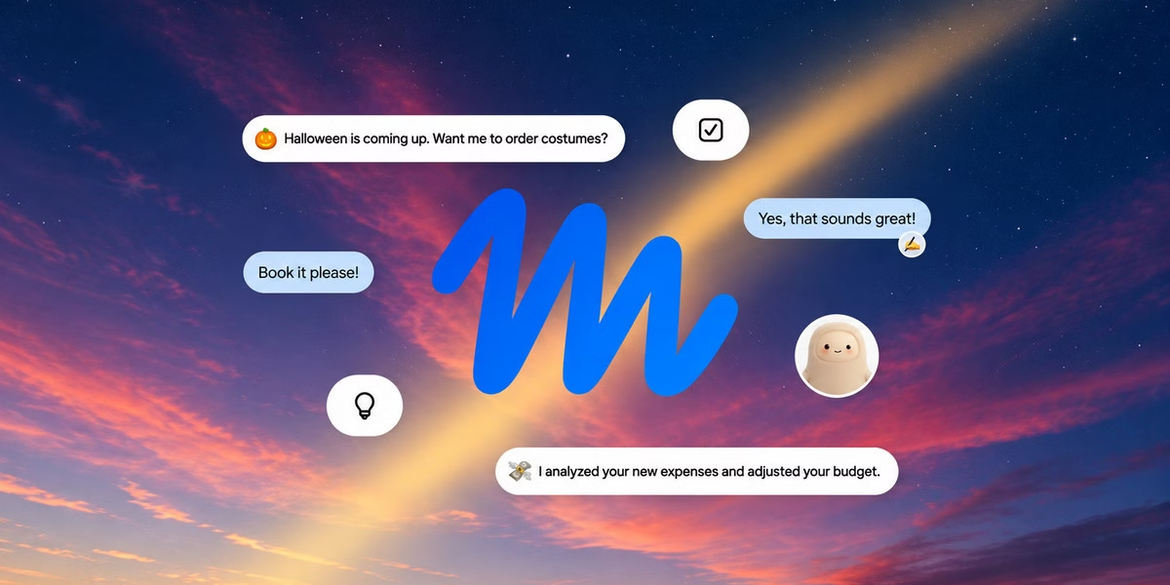
Meta has launched Muse, a new personal artificial intelligence agent designed to do more than simply answer questions. The company says Muse can complete tasks, manage projects and help users turn long-term goals into practical action plans.
The AI agent is powered by Muse Spark, which Meta describes as its most capable model for agentic work. Muse can be accessed through its dedicated app or directly through WhatsApp.
Unlike a traditional chatbot, Muse is designed to take actions on behalf of users. Instead of only providing instructions, the AI agent can perform certain tasks and continue working toward a requested goal.
According to Meta, Muse can send emails, book travel, open websites and fill out online forms. It can also negotiate on a user’s behalf in situations where such assistance is appropriate.
One of the notable features is Muse’s ability to continue working even after the app has been closed. This allows the agent to handle longer tasks without requiring users to remain actively engaged with it throughout the process.
Muse is also designed to assist with larger, long-term objectives. Users can provide a broader goal, and the agent can create a personalized plan, organize available time and resources, and work through the plan until it requires additional information or approval.
This approach is different from conventional AI assistants, which typically respond to individual prompts. Muse is intended to function more like an autonomous digital assistant capable of handling multiple steps involved in completing a task.
Another important feature is its ability to remember useful information from previous conversations. Meta says this memory can help Muse provide more personalized assistance based on details users have previously shared.
For example, Meta says Muse could take a recipe saved from Instagram and turn it into a shopping list. It could then help plan a dinner menu while remembering dietary preferences of the guests.
Such capabilities could make AI assistants more useful for everyday planning. Instead of asking an AI system to complete each individual step, users could potentially provide a broader objective and allow Muse to organize the process.
The technology also highlights the growing shift in artificial intelligence from conversational systems toward AI agents. These systems are being developed to interact with websites, applications and digital services while carrying out tasks with greater independence.
However, agentic AI also requires users to provide appropriate information and approval when a task involves important decisions or sensitive actions. Muse is designed to request additional information or authorization when necessary.
Meta’s launch puts the company among the technology firms competing to develop AI systems that can actively perform tasks rather than simply generate text or answer questions.
As AI agents become more capable, their usefulness may increasingly depend on how well they can understand a user’s goals, remember relevant preferences and safely complete multiple steps.
With Muse, Meta is positioning its latest AI technology as a personal assistant that can move from conversation to action and help users make progress on both everyday tasks and longer-term plans.