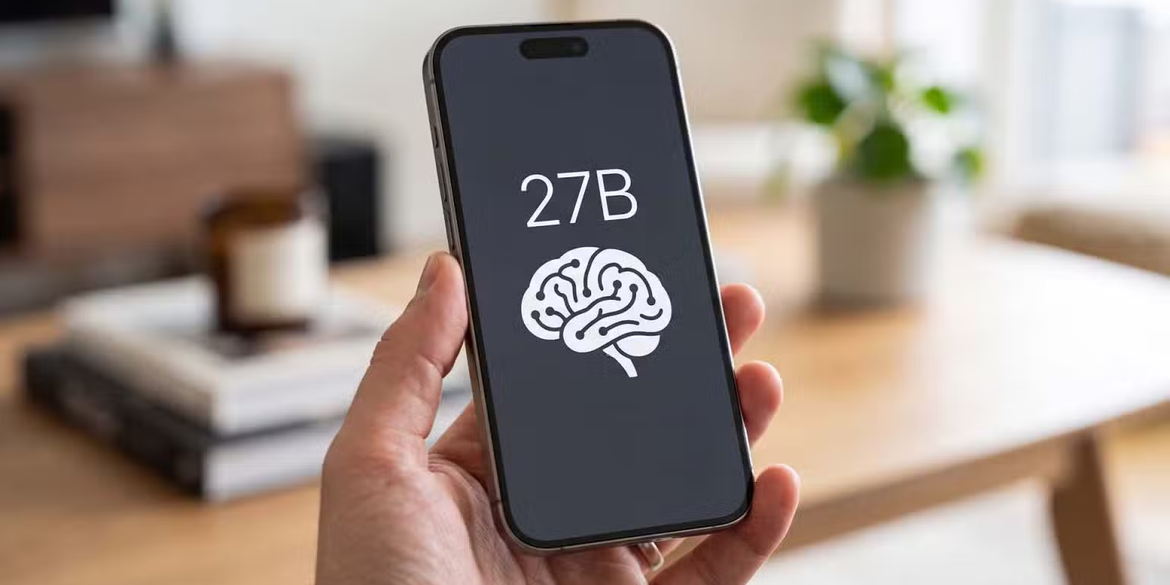
Apple’s upcoming iPhone 18 Pro is showing a major jump in on-device artificial intelligence performance, with the smartphone reportedly capable of running a massive 27-billion-parameter AI model at around twice the speed achieved by the iPhone 17 Pro.
The performance improvement highlights Apple’s continued focus on processing AI workloads directly on smartphones rather than relying entirely on cloud-based computing.
The key upgrade comes from Apple’s new A20 Pro chip, which introduces a dual-16-core Neural Engine designed to handle demanding artificial intelligence and machine learning tasks more efficiently.
Alongside the upgraded Neural Engine, the iPhone 18 Pro and iPhone 18 Pro Max are expected to benefit from faster memory. The combination of additional AI processing capability and improved memory performance contributes to the reported gains in running large AI models on the device.
A 27-billion-parameter model represents a significant workload for a smartphone. Larger parameter counts generally allow AI models to handle more complex tasks, although performance also depends on model architecture, quantization, memory bandwidth and other hardware factors.
The reported results indicate that Apple is pushing its Neural Engine beyond traditional smartphone AI features. Instead of limiting on-device AI to smaller tasks such as image processing, voice features and predictive functions, the latest hardware is being positioned to handle substantially larger generative AI models.
The iPhone 18 Pro’s reported performance also suggests that faster local AI processing could reduce the need to send certain AI requests to remote servers. This can potentially improve response times and offer greater privacy for supported tasks because processing can take place directly on the device.
The iPhone 18 Pro Max is also expected to receive the same A20 Pro platform and faster memory technology, making both Pro models relevant to Apple’s broader push toward advanced on-device AI.
Apple has not yet detailed all of the real-world AI capabilities that the new hardware will support. However, the reported ability to run a 27-billion-parameter model at significantly higher speed demonstrates the growing processing capabilities of flagship smartphones.
As smartphone manufacturers increasingly compete in generative AI, dedicated neural processing hardware and faster memory are becoming important differentiators. Apple’s A20 Pro could therefore play a central role in determining how demanding AI applications perform on the next-generation iPhone Pro lineup.