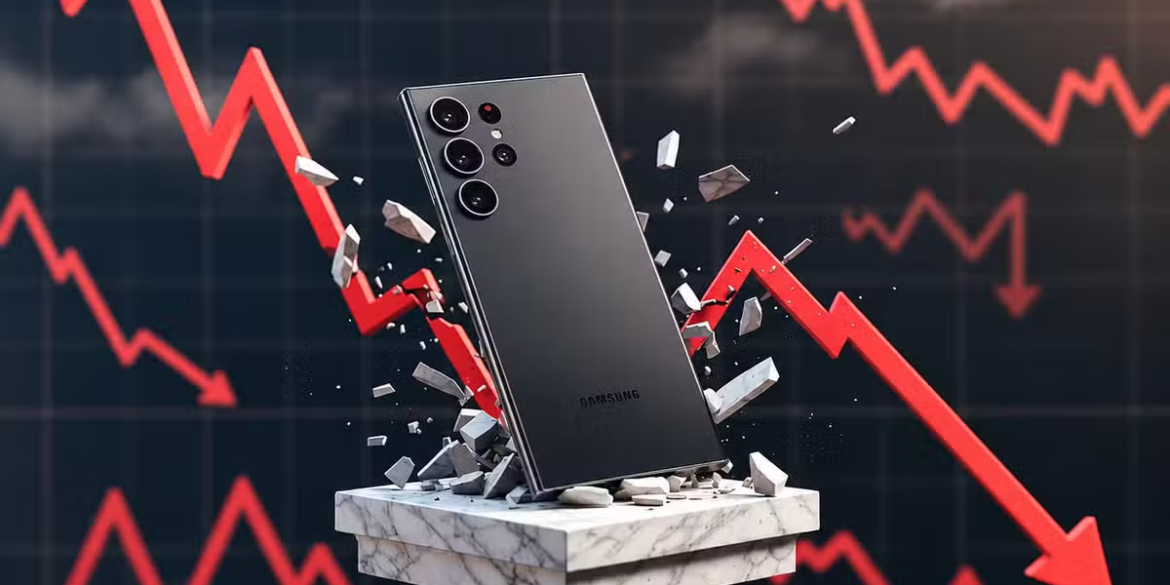
Samsung Electronics is expected to achieve record-breaking financial results in the second quarter of 2026, driven largely by strong demand for memory chips, but the company’s smartphone business may face an unprecedented setback with its first-ever quarterly loss.
According to analysis by DealSite South Korea, Samsung’s Mobile eXperience (MX) division could report results ranging from a profit of around KRW 1.9 trillion to a loss of approximately KRW 1.5 trillion during Q2 2026. However, the most likely estimates suggest the mobile division could record a loss between $364 million and $729 million.
The potential decline marks a major contrast with Samsung’s overall performance, which has been boosted by the rapid growth of the semiconductor industry. While the company’s chip business continues to benefit from rising demand, its smartphone segment is reportedly facing increasing challenges.
Samsung’s overall earnings outlook remains strong due to higher memory chip prices. Reuters reported that the company estimated second-quarter operating profit of around KRW 89.4 trillion, representing a significant increase compared with the same period a year earlier. The company’s revenue is also expected to reach approximately KRW 171 trillion.
The semiconductor division has emerged as the primary contributor to Samsung’s financial growth. Growing demand for artificial intelligence technologies has increased the need for advanced memory solutions, including DRAM and NAND products used in data centres, AI systems, and consumer electronics.
Rising demand for AI infrastructure has pushed memory prices higher, allowing Samsung’s chip business to recover strongly. Analysts noted that demand growth has expanded beyond high-bandwidth memory used in AI applications and has also supported traditional memory products.
In contrast, Samsung’s smartphone business is facing a more challenging market environment. Increasing competition from Chinese smartphone manufacturers, slower global device upgrades, and pressure on profit margins have created difficulties for major mobile brands.
The smartphone industry has become increasingly competitive, with companies competing through pricing, camera technology, artificial intelligence features, and ecosystem services. Maintaining profitability has become more difficult as consumers hold onto devices for longer periods and manufacturers face rising production costs.
Samsung remains one of the world’s largest smartphone makers, with its Galaxy series continuing to compete in premium and mid-range markets. However, changing consumer behaviour and intense competition have placed pressure on the profitability of the mobile division.
The possible loss in Samsung’s MX division highlights the changing dynamics of the global technology industry. While artificial intelligence and semiconductor demand are creating new opportunities, traditional consumer electronics businesses are facing increasing pressure.
Samsung’s future performance will likely depend on how effectively it balances growth in emerging technologies with maintaining competitiveness in the smartphone market. The company’s ability to integrate AI features into its devices and strengthen its premium product strategy will play an important role in improving mobile business performance.