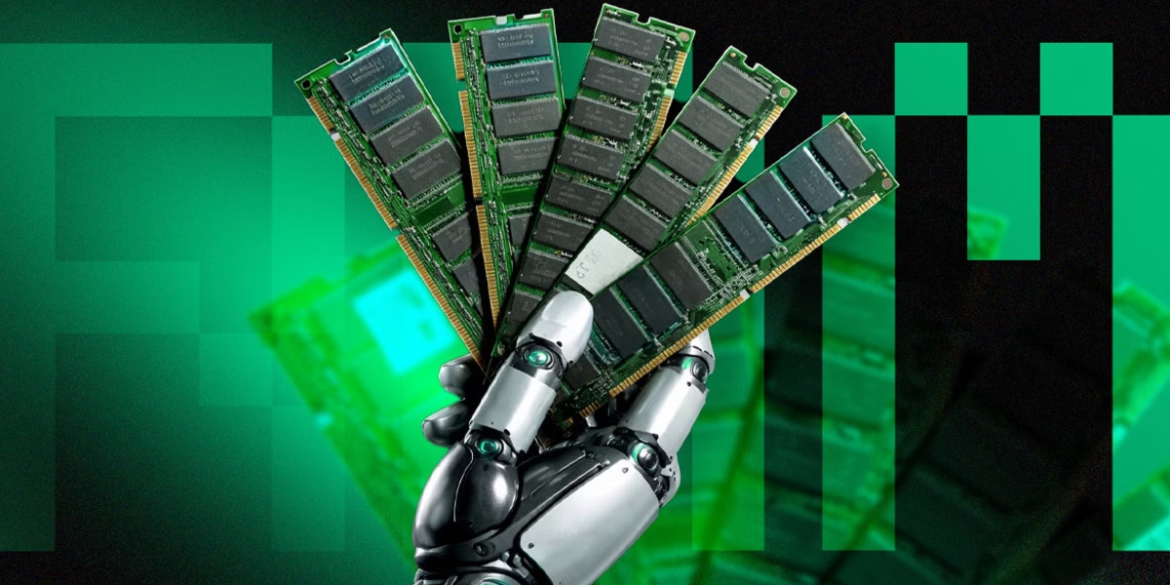
The global memory chip market could remain under significant pressure well into 2027, as leading manufacturers Samsung, SK Hynix, and Micron have reportedly allocated their entire planned production capacity for DRAM and High Bandwidth Memory (HBM). If confirmed, the development could prolong the ongoing memory shortage and impact industries ranging from consumer electronics to artificial intelligence.
According to industry publication DigiTimes, citing sources familiar with the matter, all available production capacity for 2027 has already been reserved by customers. While the report has generated considerable attention across the semiconductor industry, none of the three manufacturers has officially confirmed the claims.
The reported sellout reflects the soaring global demand for advanced memory chips, particularly High Bandwidth Memory, which has become a critical component for artificial intelligence (AI) servers, high-performance computing systems, and next-generation data centers.
DRAM, or Dynamic Random Access Memory, is widely used in desktop computers, laptops, smartphones, gaming consoles, and enterprise servers. HBM, on the other hand, delivers significantly higher memory bandwidth and energy efficiency, making it essential for AI accelerators and advanced graphics processors.
The rapid expansion of generative AI technologies has dramatically increased demand for high-performance chips. Companies developing AI models require powerful processors paired with large amounts of advanced memory, putting additional pressure on global semiconductor supply chains.
Industry analysts believe that technology giants and cloud service providers are securing long-term supply agreements to guarantee access to memory chips needed for future AI infrastructure. These advance bookings may explain why production capacity is reportedly being reserved years ahead of delivery.
If supply remains constrained throughout 2027, consumers could experience higher prices for products that rely on memory chips. Personal computers, gaming hardware, smartphones, enterprise servers, and AI-enabled devices could all see increased manufacturing costs if demand continues to outpace production.
The situation may also affect graphics card manufacturers, cloud computing providers, and businesses investing heavily in artificial intelligence infrastructure. Limited HBM availability has already become one of the key challenges facing companies producing AI accelerators and next-generation computing hardware.
Samsung, SK Hynix, and Micron collectively dominate the global DRAM market, supplying memory chips to many of the world’s leading technology companies. Their production decisions play a crucial role in determining pricing, availability, and market stability across the semiconductor industry.
Despite the report, industry observers caution that production plans can change over time. Memory manufacturers may expand fabrication capacity, improve manufacturing yields, or adjust production priorities based on market demand. Since the companies have not officially confirmed that their 2027 capacity is fully sold out, the report should be viewed as an indication of strong market demand rather than a finalized industry position.
With artificial intelligence continuing to drive unprecedented investment in advanced computing, the global memory market is expected to remain one of the most closely watched segments of the semiconductor industry. Whether manufacturers expand production or demand continues to accelerate, memory availability will likely remain a major factor shaping technology markets over the next several years.