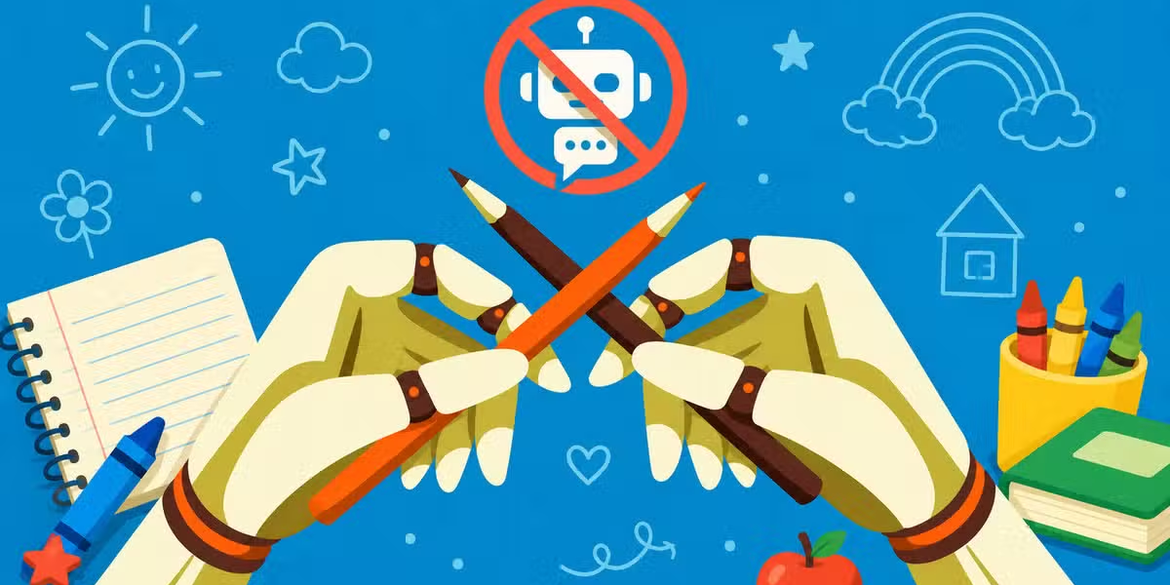
New York City Public Schools has introduced a new artificial intelligence policy for the 2026 academic year that places significant restrictions on how students can use generative AI for schoolwork.
Under the new rules, students in grades 2 through 8 will not be permitted to use generative AI for academic assignments. High school students will have more limited access, with AI use allowed only under teacher supervision.
The policy represents a major shift in how one of the world’s largest public school systems is approaching the growing use of artificial intelligence in education.
The restrictions are expected to affect about 600,000 students across New York City. The school system serves roughly two-thirds of the city’s public school population, making the policy potentially significant for the wider debate over AI in classrooms.
New York City Mayor Zahran Mamdani defended the restrictions, arguing that the availability of advanced technology does not automatically mean it should be used in every aspect of education.
Mamdani emphasized the importance of students learning directly with teachers and classmates. He said young learners should have opportunities to ask questions, work through challenging problems and develop solutions independently.
The mayor also questioned whether there is enough credible evidence demonstrating that generative AI provides educational benefits for elementary and middle school students.
He said some research supporting AI use in education has been backed by companies that could financially benefit from the technology, raising questions about how its educational impact should be assessed.
Despite the restrictions, the policy does not amount to a complete ban on artificial intelligence in New York City schools.
Instead, the approach creates different levels of access based on students’ age and educational level. Younger students face stronger restrictions, while high school students may use generative AI in controlled situations with guidance from teachers.
The policy reflects growing concerns among educators and policymakers about how AI tools could affect learning, independent thinking and students’ ability to complete academic work themselves.
Generative AI systems can produce text, answer questions and assist with a wide range of school tasks. Their rapid adoption has created new challenges for schools trying to balance technological innovation with traditional learning methods.
New York City’s decision could become part of a broader discussion about how schools should regulate AI as the technology becomes increasingly accessible to students.
For younger learners, the policy places greater emphasis on developing fundamental academic skills without relying on AI-generated assistance.
For older students, supervised access allows schools to explore potential educational uses of artificial intelligence while maintaining a level of teacher oversight.
The new rules will therefore not eliminate AI from education in New York City. Instead, they establish boundaries around when and how students can use generative AI for academic purposes.