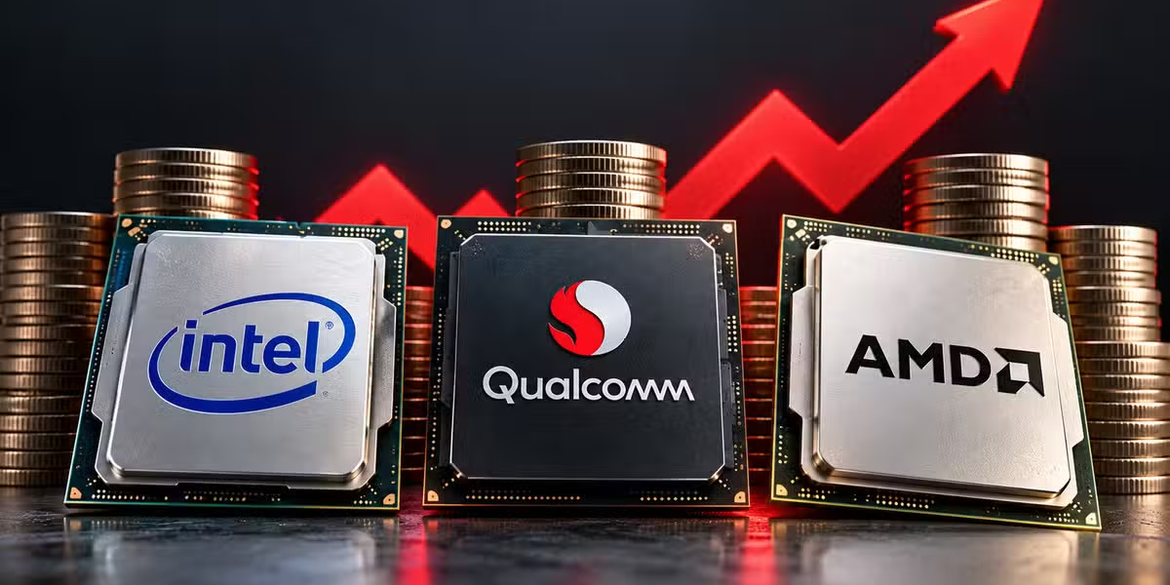
Processor prices are heading upward again as rising demand for artificial intelligence (AI) infrastructure puts additional pressure on the semiconductor industry. Intel and Qualcomm have reportedly increased prices across several processor families, while AMD could follow with price hikes affecting selected Ryzen and EPYC chips.
The reported changes could have implications for computer manufacturers, laptop buyers, businesses and technology enthusiasts. As processors remain essential to personal computers, servers and AI-related systems, higher component costs may eventually affect the prices of some consumer devices.
According to supply-chain reports, AMD is also expected to increase prices on certain processors by around 10%. However, the reported adjustments do not necessarily apply to every model in the companies’ product lineups.
Intel’s latest pricing changes have attracted particular attention because of the reported increases affecting its upcoming Panther Lake processor family. These chips are part of Intel’s efforts to strengthen its position in the competitive PC processor market.
Intel Panther Lake CPUs Face Reported Price Increases
Intel had reportedly been expected to raise processor prices by as much as 10% in October. However, supply-chain information suggests that some price adjustments may have already been introduced in September.
The largest reported increases concern selected high-end Panther Lake processors. Certain models featuring more powerful integrated graphics have reportedly become 15% to 20% more expensive.
These increases appear to be concentrated on specific configurations rather than the entire Panther Lake lineup. Processors equipped with stronger integrated graphics are among the models reportedly facing the most significant adjustments.
Integrated graphics allow a processor to handle visual workloads without requiring a separate graphics card. This capability is particularly useful in laptops and compact computers, where power efficiency, space and overall system costs are important considerations.
As a result, higher prices for these configurations could influence manufacturers when selecting processors for premium laptops and other compact computing devices. The final impact on retail prices will depend on product specifications, manufacturer pricing decisions and other hardware costs.
Qualcomm and AMD Could Add to Rising CPU Costs
Intel is not the only processor manufacturer reportedly adjusting prices. Qualcomm has also been linked to price increases across several processor families, adding to concerns about rising costs throughout the semiconductor market.
Qualcomm develops processors for a range of computing devices, including laptops and other connected electronics. Changes in processor pricing could therefore affect manufacturers operating across different segments of the technology market.
AMD is also expected to increase prices on selected Ryzen and EPYC processors by approximately 10%, according to the reports. Ryzen chips are widely used in desktop and laptop computers, while EPYC processors target servers and data centres.
Any price increase affecting EPYC products could be particularly relevant to businesses investing in computing infrastructure. Server processors are an important component of data centres, which require substantial processing capacity to support cloud services, enterprise applications and AI workloads.
However, the reported increase should not be interpreted as a confirmed price change across every AMD processor. The available information points to selected models, and the precise scope of any adjustments remains important.
How AI Demand Is Influencing Processor Prices
The growing adoption of AI is increasing demand for computing infrastructure and placing pressure on parts of the semiconductor supply chain. AI systems require substantial processing power, memory, advanced packaging and other specialised components.
Although high-performance AI accelerators receive much of the attention, the wider expansion of data centres can also affect demand for server CPUs and other computing hardware. At the same time, semiconductor manufacturers must manage production capacity, component availability and manufacturing expenses.
These pressures can contribute to higher costs for certain processor families. However, pricing decisions also depend on product positioning, supply agreements, manufacturing yields and competition between chipmakers.
For consumers, higher processor prices could make some laptops and desktop computers more expensive if manufacturers pass additional costs on to buyers. Businesses purchasing large quantities of hardware could also face higher procurement expenses.
The impact will not necessarily be uniform. Manufacturers may absorb part of the increase, adjust product configurations or maintain existing prices on selected models to remain competitive.
What Higher CPU Prices Could Mean for PC Buyers
Consumers planning to purchase a new computer may want to compare processor specifications and overall system prices before making a decision. A higher-priced CPU does not automatically translate into a proportionate increase in the final price of a laptop or desktop.
Buyers should consider their computing requirements, including everyday productivity, gaming, content creation and professional workloads. A well-matched processor can provide better value than paying extra for features that may not be needed.
For businesses, the reported changes could make hardware budgeting more important, especially when purchasing large numbers of computers or upgrading server infrastructure. Comparing available configurations and reviewing total ownership costs may help reduce the impact of rising component prices.
Overall, the reported price increases at Intel and Qualcomm, alongside a possible 10% increase for selected AMD Ryzen and EPYC processors, highlight the cost pressures affecting the semiconductor industry. With AI demand continuing to reshape computing priorities, processor pricing will remain an important factor for hardware manufacturers and buyers.