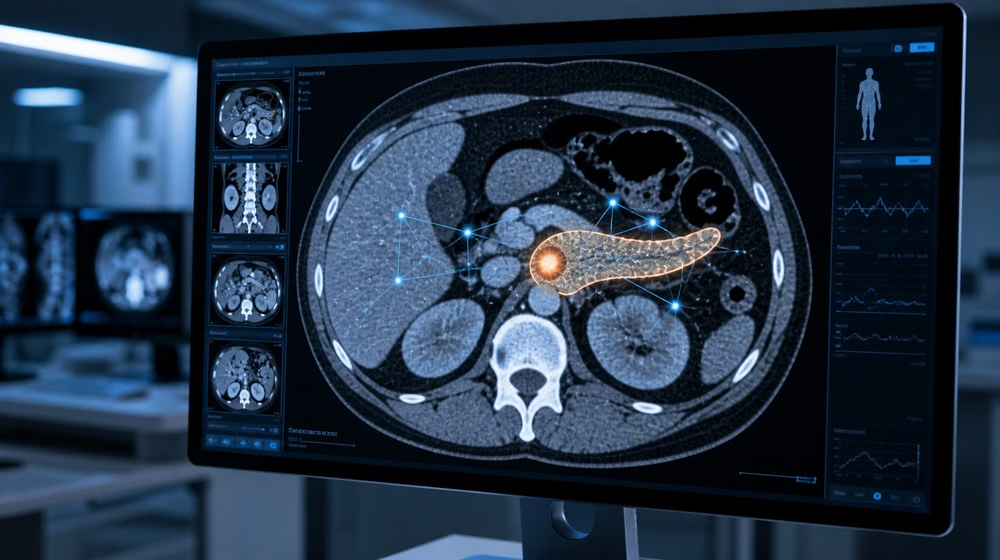
A new artificial intelligence system known as REDMOD is showing promising potential in identifying Pancreatic Cancer at much earlier stages than traditional diagnostic methods. The research, published in the medical journal Gut, highlights how advanced algorithms can detect subtle warning signs that often go unnoticed.
The AI model focuses on identifying minute tissue changes linked to Pancreatic Ductal Adenocarcinoma, the most common and deadliest form of pancreatic cancer. These changes are typically invisible on standard imaging scans, which is why early diagnosis has remained a major challenge for doctors.
Pancreatic cancer is known for its low survival rate, largely because it is often detected at an advanced stage. Early symptoms are either mild or nonexistent, and conventional screening tools struggle to pick up the disease in its initial phases. This delay significantly limits treatment options and reduces patient survival chances.
To address this critical gap, researchers developed REDMOD, short for Radiomics-based Early Detection Model. The system uses radiomics, a technique that extracts large amounts of data from medical images, to analyze patterns and abnormalities that human observation may miss.
By leveraging artificial intelligence, REDMOD can process complex imaging data with high precision, potentially allowing clinicians to identify high-risk patients much earlier. This could lead to faster intervention, improved treatment outcomes, and ultimately save lives.
Experts believe that integrating AI tools like REDMOD into routine medical screening could transform cancer diagnostics. While further clinical validation is still required, the early results mark a significant advancement in the fight against one of the most aggressive cancers.