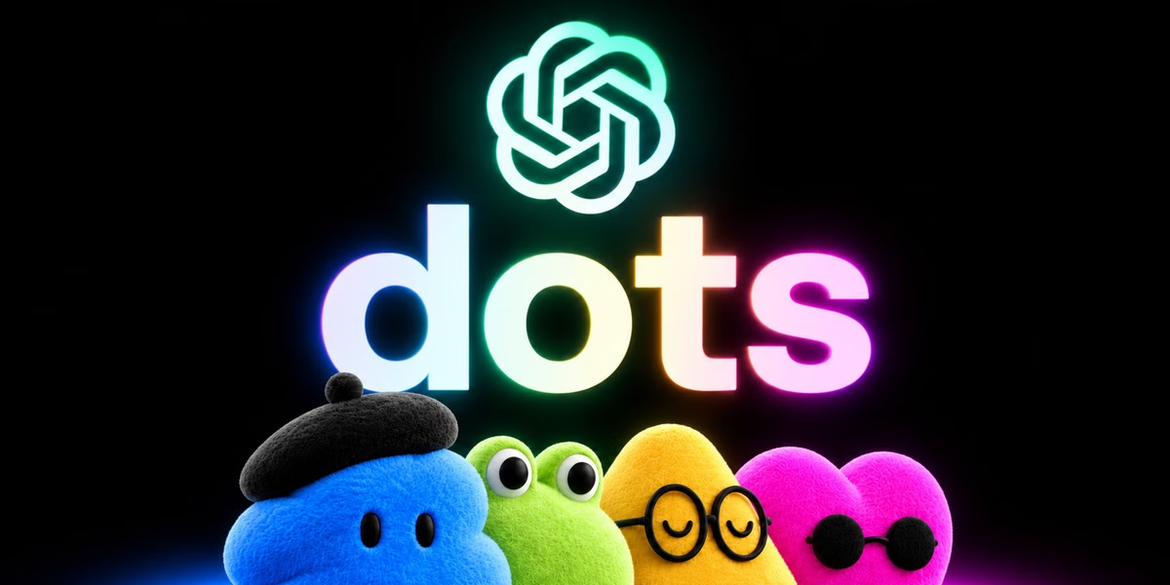
OpenAI has introduced a new category of personal artificial intelligence agents designed to continue working on user-defined tasks even when the user is no longer actively interacting with them.
The company unveiled Dots during its DevDay 2026 event, describing the technology as an always-on AI agent powered by GPT-6 Astra. The new system is designed to move beyond the traditional chatbot model, where users generally need to provide a prompt before the AI performs a task.
According to OpenAI, Dots are intended to pursue goals over an extended period rather than simply responding to individual requests. This means users can assign an objective and allow the agent to continue working toward it without requiring constant supervision.
A key feature of Dots is their dedicated cloud computing environment. OpenAI says each Dot receives its own cloud computer and browser, allowing the agent to interact with online resources and perform tasks within its assigned environment.
The system is also designed to remain active after a user logs off. This could allow certain tasks to continue running in the background instead of stopping when the person closes the application or ends an active session.
The concept represents a shift in how personal AI assistants may operate. Traditional AI tools generally respond when users ask questions, generate content or request specific actions. An autonomous agent, by contrast, can be configured to work toward a broader objective over time.
For users, this could potentially make AI useful for longer-running workflows that require multiple steps. Instead of repeatedly telling an AI what to do next, an agent could manage a sequence of tasks based on the goal it has been given.
The dedicated browser and cloud computer are also important parts of the system. Giving an AI agent its own computing environment can allow it to carry out activities that require access to websites, software tools and digital information.
However, always-on AI systems also introduce questions about how users control automated actions. As these agents become capable of operating independently, users may need clear ways to define permissions, monitor activity and review the work performed on their behalf.
OpenAI’s introduction of Dots signals a broader move toward AI systems that are designed to act rather than simply answer. The focus is shifting from one-time prompts to longer-running digital assistance.
The technology could have applications across research, online tasks, productivity and other workflows that require repeated actions. Its practical usefulness will depend on how reliably the agents can complete tasks and how much control users retain over their activities.
OpenAI says Dots are built to keep working toward assigned goals even when users are offline. With a dedicated cloud computer and browser for each agent, the company is positioning the technology as a new form of personal AI that can operate continuously.
As AI agents become more capable, the distinction between conversational AI and autonomous digital assistants is becoming increasingly important. Dots represent OpenAI’s latest effort to develop AI that can take on ongoing tasks rather than waiting for users to issue every individual instruction.